


VTuber Model Studio vs Freelancer — Which Should You Choose?

When you're planning your VTuber debut, one of the first real decisions you'll face is who to commission. The two main options are a dedicated studio or an independent freelancer and the right answer depends on where you are in your career, what you need from the process, and how much risk you're comfortable carrying.
Neither option is universally better. Both have produced excellent models. Both have also produced disappointing ones. What matters is understanding what each actually offers before you hand over a deposit.
What a freelancer actually means in this context
In the VTuber space, "freelancer" usually refers to an independent artist, rigger, or artist-rigger combo who works alone or in a small informal partnership. They take commissions directly, often through Twitter/X, Booth, or their own website, and manage the project themselves.
The best freelancers are genuinely exceptional. Some of the most technically impressive Live2D work in the industry comes from individual riggers who have spent years refining a very specific craft. If you find the right person, you get direct access to that skill at a price that reflects their individual overhead rather than a studio's operating costs.
The case for hiring a freelancer
Cost is the most obvious advantage. A freelancer typically has lower overhead than a studio as there's no office, no project managers, no administrative layer. That saving can get passed on to the client, which is why freelance commissions often come in at a lower price point for comparable quality work.
Direct creative relationship is the other major benefit. When you commission a freelancer, you're talking directly to the person making your model. Feedback goes straight to the source. There's no intermediary translating your notes, and creative alignment can happen faster when the channel is that direct.
Specialization is also worth considering. Some freelancers are known specifically for a particular style or rigging technique. If their portfolio is exactly what you want, you may not need a studio's broader range of services at all.

The risks that come with freelancing
The advantages are real, but so are the risks, and they're worth understanding before you commit.
Capacity and timeline are the most common pain points. A solo freelancer is one person. If they get sick, take on too many commissions, or face a personal situation, your project can stall with no backup.
Scope limitations matter if your needs grow. A freelancer who illustrates may not rig, or vice versa. If you need both, you're coordinating between two people yourself which adds time and communication overhead.
Contracts and IP protection vary widely. Some freelancers offer clear, professional agreements. Others work informally. For something as central as your VTuber identity, having a formal contract covering ownership, deliverables, and revision terms is not optional.
The risks that come with hiring a studio
Studios offer structure, but that structure comes with its own trade-offs worth knowing upfront.
Cost is higher by default. Studio office, project management, team coordination is built into the price. If your budget is tight and your project is straightforward, that overhead may not add value for your specific situation.
Less direct creative access. In a studio, your feedback often goes through a project manager before it reaches the artist. That layer helps with organization, but it can slow down the back-and-forth that makes creative work feel collaborative.
Style consistency depends on art direction quality. Studios often assign multiple artists to different parts of a project. If internal art direction is weak, the result can feel disjointed. Ask how they maintain consistency across a team before you commit.
The case for hiring a studio
A studio brings infrastructure that a solo freelancer structurally can't offer. That infrastructure matters most in three situations: when your project is complex, when your timeline is fixed, or when the stakes are high enough that you can't afford things to go wrong.
Team redundancy means your project keeps moving even if one team member has an issue. Illustration and rigging happen under the same roof, coordinated by people who work together regularly.
Consistent process means you know what to expect. Established studios have intake processes, milestone check-ins, revision workflows, and delivery standards that have been tested across many projects. You're not the first client they've had to manage.
Full-service capability matters if you need more than a model. If you want a debut package, character design, rigging, expression sheets, overlay assets, and a promotional key visual, a studio can handle all of it coherently. Assembling that from multiple freelancers takes coordination time you may not have.
Accountability is cleaner. A studio has a business reputation to protect, a contract to honor, and a team that can absorb problems without the whole project collapsing.

How to decide a practical framework
Ask yourself these four questions:
1. What's your budget range? If you're working with a tighter budget and have time to research individual artists carefully, a freelancer can deliver excellent results. If your budget allows for a studio and your timeline is defined, the process reliability is usually worth it.
2. How complex is your project? A single Live2D model with standard expressions, a skilled freelancer can handle this well. A full debut package with multiple outfits, accessory toggles, and promotional materials — that's where a studio's coordination becomes valuable.
3. How much risk can you absorb? If a delayed or failed commission would derail your debut plans significantly, the structural reliability of a studio is worth paying for.
4. Do you need ongoing work? If you're planning model updates, new outfits, or additional assets over time, having a studio relationship means consistent style and a team that already knows your character.

What this looks like in practice
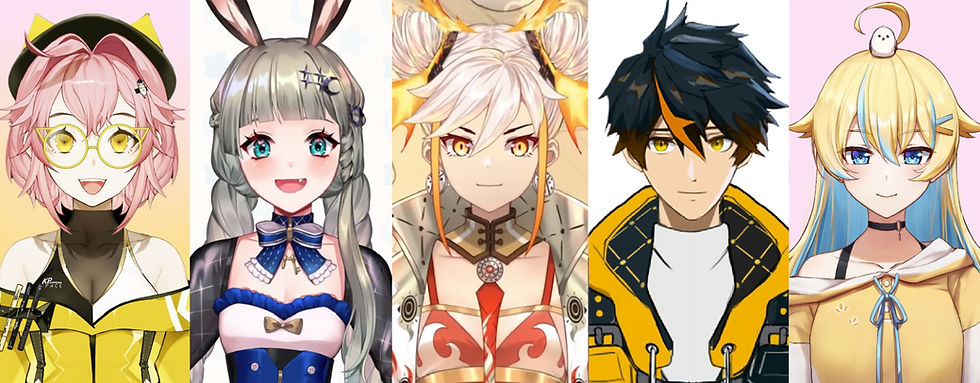
At KP Comics Studios, we've built VTuber models for independent streamers and full agencies. Our work includes models for Polygon Official, Thailand's leading VTuber agency, home to Aisha who has over 500,000 YouTube subscribers, as well as Zelina for Pixela and Ryo for Team RRQ. Those projects required coordinated illustration, rigging, expression design, and delivery to agency standards on a fixed timeline. That's the kind of work where a studio's process earns its place.

That said, we also work with solo VTubers who simply want a professional, reliable experience for their first model, people who've done their research and want to know exactly what they're getting before they commit.
Trying to decide what's right for your situation? Talk to us — we're happy to give you an honest answer even if a studio isn't what you need. We respond in English, Japanese, and Thai within 24–48 hours.
Posted by KP Comics Studios — Bangkok-based anime-style production, serving clients in Japan, the US, Singapore, Korea, and Europe since 2015.
Comments